Year one is not just letters and numbers. For a child moving to another country, it is an introduction to a new language, new rules, and a new daily routine. The teacher speaks a language the child has never heard at home. Classmates play games they don't know. Lunch in the dining hall, uniform, the bus ride — everything is organised differently. Primary school abroad involves not only teaching but also helping with this adaptation.
How Primary Programmes Are Taught
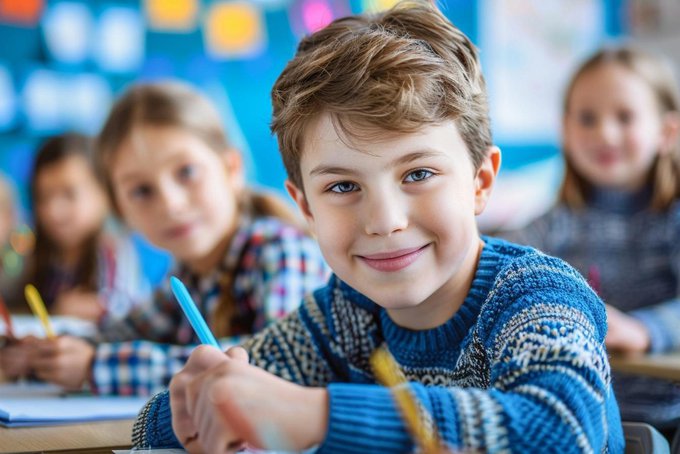
Primary programmes in private and boarding schools are built around basic skills: reading, writing, counting, and the first ideas of science. But the way they are taught is different from what many families are used to. Children do a lot of hands-on work, play, draw, build, and discuss. The teacher doesn't stand at the board for the whole lesson — they move around the classroom, come up to each child, ask questions, and guide. Mistakes are not punished but discussed. The child learns to try without being afraid of making a mistake.
Classes are usually small. In some schools, there are ten to twelve children per teacher. This makes it possible to see how each student reads, counts, and interacts with peers. If a child is behind in language, they receive extra lessons, often in a playful format. If they are ahead, they are given more challenging tasks so they don't get bored.
Social skills receive particular attention. Children are taught to negotiate, share, listen to each other, and express disagreement in words. Conflicts are resolved together with the teacher. This is no less important than the multiplication table, because how a child feels at school every day depends on their ability to build relationships.
Support for International Families
There are particular considerations for international families. Language support can be integrated into lessons or provided as separate sessions. Schools often offer preparatory programmes before the start of the academic year. Parents are told how the day is structured, what to buy, and how to contact the teacher. Some schools assign a mentor from the older years to a new student — a child who helps them settle in.
Choosing the Right Age
Parents often ask at what age a child can be sent to school abroad. The answer depends on the country, the school, and the child. Some are ready for boarding at seven, while others are more comfortable with their parents until twelve. We discuss this with the family and offer options that suit their age, character, and budget.
Long-Term Impact and Careful Selection
Primary education shapes attitudes to learning for years to come. If the first years are calm and interesting, the child goes to school without fear afterwards. If adaptation was difficult, this can affect motivation for a long time. That's why it's important to choose a primary school carefully, taking into account the language, environment, and support the school is ready to provide.
How We Help
We help families find a primary school for an international student, prepare for admission, and organise the move. If you are planning to send your child to a primary school abroad and don't know where to start, write to us. We will look at your situation and suggest suitable options.